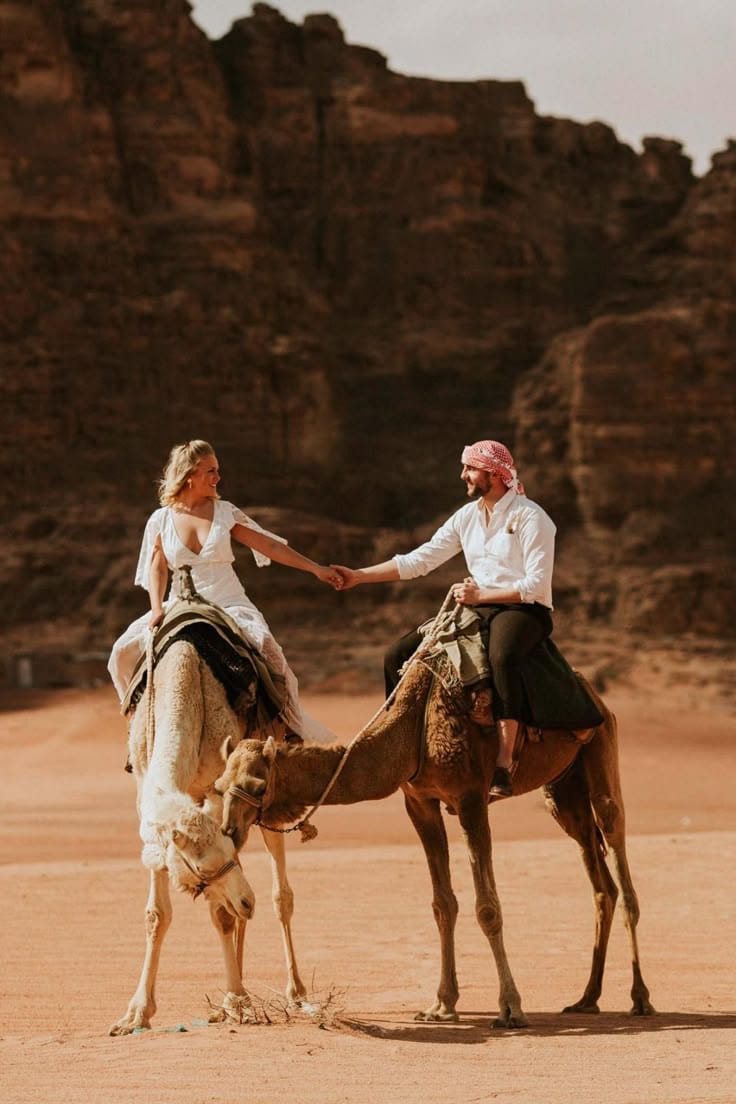
Camel riding is one of the experiences many travelers associate with Egypt.
For centuries, camels have been connected with desert travel, trade routes and life in arid regions. Today, tourists can experience camel riding during desert excursions, village visits and cultural tours around destinations such as Hurghada, Marsa Alam, the Sinai and other parts of Egypt.
But modern camel riding should be more than a photo opportunity.
A good experience combines cultural understanding, preparation, safety and respect for the animal.
If you are planning a camel riding experience in Egypt, it is worth knowing how these animals became so important to desert communities, what to expect during a ride and how to choose an experience that takes animal welfare seriously.
This guide covers the history of camels in Egypt, practical preparation, comfort, safety, respectful interaction and responsible tourism.
The Camel and the Egyptian Desert
The Egyptian desert can be beautiful, but it is also a demanding environment.
For thousands of years, people have needed reliable ways to move across dry landscapes where water and vegetation can be limited.
Camels became exceptionally valuable in these environments because they can travel long distances and cope with conditions that are difficult for many other domesticated animals.
Their ability to carry loads also made them important for transportation.
The image of a camel crossing the desert is therefore not simply a tourist symbol. It reflects a much older relationship between people, animals and the desert.
A Short History of Camel Travel in Egypt
Camels have a long history in the wider region, but their arrival and widespread use in Egypt developed over time rather than beginning in the earliest periods of ancient Egyptian civilization.
The dromedary, or one-humped camel, became particularly important in North Africa and the Middle East for transportation, trade and travel.
Once camel transport became established, the animal transformed movement across arid landscapes.
A journey that was difficult or impractical with other forms of transport could become much more manageable with a camel caravan.
Camels could carry people, food, water and commercial goods.
This made them valuable along desert routes connecting settlements and trading centers.
Camels and Trade
Trade was one of the most important historical uses of camels.
Caravans could travel across desert regions carrying goods between different communities.
A camel’s ability to carry substantial loads while coping with limited water availability made it particularly useful for long-distance journeys.
Trade routes across Egypt and neighboring regions connected the Nile Valley, Red Sea coast, eastern desert and areas farther south and east.
These routes were not simply lines across a map.
They were part of a wider network involving merchants, guides, travelers, animals, wells and settlements.
Camels and Desert Communities
The relationship between people and camels was also practical.
In desert communities, animals could support transportation and livelihoods.
A camel might carry supplies, transport people or help a family move goods from one location to another.
This practical role is very different from the modern tourist experience.
When a visitor rides a camel for thirty minutes or an hour, they are experiencing only a small part of a much longer cultural history.
Understanding this difference helps create more respectful tourism.
Camel Riding in Modern Egypt
Today, camel riding is primarily associated with tourism in many popular destinations.
Visitors can find camel experiences in different settings, including:
- desert excursions,
- Bedouin-style experiences,
- coastal desert tours,
- village visits,
- sunset trips,
- photography tours,
- combined safari excursions.
The experience can vary greatly from one tour to another.
Some trips focus almost entirely on riding.
Others combine a short camel ride with activities such as a desert safari, traditional meals, cultural demonstrations or time in a local-style camp.
This means you should look at the entire program rather than choosing an excursion based only on the phrase camel ride.
Camel Riding Around Hurghada
Hurghada is especially popular for desert experiences.
The city sits between the Red Sea and the Eastern Desert, so visitors can combine a beach holiday with a journey into the desert landscape.
A camel ride can therefore become part of a wider Hurghada desert safari.
Depending on the tour, you may travel by vehicle into the desert before meeting the camels.
The landscape changes quickly.
Behind the coastal resorts, the desert offers rocky mountains, dry valleys and wide open spaces.
For travelers who have spent most of their holiday near the sea, this can provide an entirely different view of Egypt.
If you are researching excursions from Hurghada, Best Tours Hurghada can be one option to consider when comparing available desert experiences.
As with any excursion, check the current itinerary and included services before booking.
What Is a Camel Ride Actually Like?
A camel does not move like a horse.
This is one of the first things beginners notice.
The camel’s walking motion creates a distinctive rocking movement.
When the camel stands up or sits down, the movement can also feel surprisingly large.
For a first-time rider, the beginning and end of the ride may therefore feel more unusual than the actual journey.
This is why listening to the guide is important.
Do not try to control the animal through sudden movements unless the guide specifically explains what to do.
How to Prepare for a Camel Ride
A little preparation can make the experience much more comfortable.
Wear Comfortable Clothes
Loose, breathable clothing is usually a practical choice in Egypt’s desert environment.
Avoid clothing that restricts your legs or makes it difficult to sit comfortably.
Long trousers can also be useful because they provide additional protection from the sun and reduce direct contact between your legs and the saddle.
Choose Practical Footwear
Wear comfortable shoes or sandals suitable for walking on sand and uneven ground.
You may need to walk around the desert camp or climb on and off the camel.
Very high heels or uncomfortable shoes are not practical.
Protect Yourself From the Sun
Desert excursions often involve strong sun exposure.
Bring:
- sunscreen,
- sunglasses,
- a hat or scarf,
- drinking water,
- light clothing that covers the skin.
A scarf can also be useful in dusty conditions.
Eat Lightly Before the Ride
Camel riding involves a repetitive rocking motion.
If you are prone to motion sickness, a very heavy meal immediately before the activity may not be comfortable.
A light meal and sufficient water can be a better approach.
If your excursion includes a meal, you can also ask the operator about the timing.
Stay Hydrated
The desert can be hot and dry.
You may not notice how much water you are losing, particularly when there is a breeze.
Drink enough water before and during the excursion according to the conditions and your personal needs.
Do not rely only on the fact that you are not sweating heavily.
What Should You Expect From the Camel?
A camel is a living animal, not a theme-park ride.
This is perhaps the most important thing to understand before booking.
The animal may:
- move more slowly than expected,
- stop,
- react to its surroundings,
- become restless,
- behave differently from another camel.
These are normal aspects of interacting with an animal.
A responsible guide should manage the situation rather than expecting the tourist to force the camel to behave in a particular way.
Comfort During a Camel Ride
Camel riding is not necessarily painful, but it can feel uncomfortable if you are not accustomed to it.
The saddle and riding position place pressure on areas of the body that may not normally experience it.
A short introductory ride can therefore be more comfortable for beginners than a very long journey.
If you experience significant discomfort, tell the guide.
There is no reason to hide pain simply because you paid for the activity.
Is Camel Riding Safe?
Like many tourism activities involving animals, camel riding carries some level of risk.
The animal is large and powerful.
There is also a risk of falling, especially while mounting or dismounting.
Safety therefore depends on several factors:
- the animal’s condition,
- the saddle and equipment,
- the guide’s experience,
- the terrain,
- weather conditions,
- rider behavior,
- the length and pace of the ride.
A well-organized excursion should provide clear instructions before the ride begins.
Listen carefully.
If the guide tells you to remain seated in a particular position, follow the instruction.
Mounting and Dismounting
For many first-time riders, mounting is the most surprising part.
A camel may kneel before you climb onto the saddle.
When it stands, it usually rises in stages.
The movement can make you lean forward and backward.
That is why you should follow the guide’s instructions and hold the designated handles or support points correctly.
Do not stand up on the camel.
Do not attempt unusual poses for photographs.
And never distract the animal simply to get a better picture.
Children and Camel Riding
Families should be especially careful when considering camel rides for children.
A child may be excited by the idea of riding a camel but may not be comfortable with the animal’s size or movement.
The suitability of a ride depends on the child’s age, size, confidence and the operator’s rules.
There is no universal age requirement that should be copied from one excursion to another.
Instead, ask the operator about the current rules for children.
Parents should also remain attentive during the activity.
If a child becomes frightened or uncomfortable, tell the guide.
Camel Riding and People With Health Concerns
Camel riding involves sitting for an extended period while experiencing repeated movement.
People with certain health conditions, mobility limitations, recent injuries or other concerns should consider whether the activity is appropriate for them.
Do not rely on a generic online statement.
Ask the tour operator about the physical demands of the specific excursion.
If you have a medical condition and are unsure whether camel riding is suitable, seek advice from a qualified healthcare professional.
The operator’s current safety rules should also be followed.
Animal Welfare: The Most Important Part
A responsible camel-riding experience should consider the welfare of the animals involved.
This means looking beyond the tourist experience.
Ask yourself:
How are the camels treated before, during and after the ride?
Important welfare considerations include:
- access to water,
- access to appropriate food,
- adequate rest,
- reasonable workloads,
- suitable shelter,
- clean equipment,
- appropriate handling,
- veterinary care when needed.
Tourists may not be able to inspect every part of an operation, but they can still pay attention to obvious warning signs.
Signs of a Responsible Camel Experience
A responsible operator should take the condition of the animals seriously.
Look for camels that appear:
- reasonably alert,
- appropriately cared for,
- free from obvious untreated injuries,
- not excessively exhausted,
- handled calmly.
The animals should not appear to be treated as disposable equipment.
The attitude of the staff matters too.
Calm handling is preferable to shouting, hitting or aggressive behavior.
If you see obvious mistreatment, reconsider participating.
Red Flags to Watch For
Travelers should be cautious if they notice:
- visible untreated wounds,
- extremely thin or exhausted animals,
- lack of accessible water,
- aggressive handling,
- overcrowding,
- excessive workloads,
- animals being forced to continue when clearly distressed.
One unusual moment does not always tell the whole story.
However, repeated or obvious signs of poor welfare should not be ignored.
Tourists influence the market through their choices.
When visitors choose responsible experiences, they encourage better standards.
How Should You Interact With a Camel?
You do not need to be an animal expert.
Basic respect goes a long way.
Move Calmly
Avoid sudden movements around the camel.
Walk calmly and listen to the guide.
Do Not Shout
Loud noises can make an animal uncomfortable.
There is rarely a reason to shout at a camel.
Do Not Pull the Animal
Do not pull on reins, ropes or other equipment unless the guide specifically instructs you.
Do Not Feed It Without Permission
Some foods may be inappropriate.
If feeding is part of the experience, ask the guide what is permitted.
Do Not Force Physical Contact
You may want to touch the camel or take a close-up photograph.
But let the guide show you the safest way to approach the animal.
The Perfect Camel Photo Is Not the Goal
Camel rides are extremely popular on social media.
A photograph of a camel against the desert can be beautiful.
But getting the perfect photograph should never come before the animal’s welfare.
Avoid:
- climbing onto the camel in unusual ways,
- standing on the saddle,
- getting extremely close to the animal’s face,
- pulling its head toward the camera,
- using loud noises to make it react,
- forcing the animal to repeat a pose.
A natural photograph is usually better anyway.
Camel Riding at Sunset
Sunset camel rides are particularly popular.
The desert changes color as the sun moves lower.
The light becomes softer, and the landscape can feel completely different from the middle of the day.
For many travelers, this is less about the riding itself and more about the atmosphere.
However, sunset tours should still follow the same safety and welfare standards as daytime excursions.
Beautiful scenery should never be used as an excuse for poor animal care.
Camel Riding and Bedouin Culture
Some desert excursions include a visit to a Bedouin-style camp.
These experiences may introduce visitors to traditional food, tea, desert life or local customs.
It is important, however, to distinguish between authentic cultural traditions and experiences designed specifically for tourists.
A respectful traveler does not expect a community to perform stereotypes simply for entertainment.
Instead, approach the experience with curiosity.
Ask questions.
Listen to your guide.
Respect local customs.
And remember that Egyptian desert communities are not a museum exhibit.
Camel Riding as Cultural Tourism
The best camel experience can provide more than a ride.
It can help visitors understand why camels became so important in desert regions.
You can learn about:
- desert transportation,
- traditional routes,
- Bedouin life,
- water sources,
- trade,
- food,
- navigation,
- relationships between people and animals.
This turns a simple activity into a cultural experience.
How Long Should a Camel Ride Be?
There is no single ideal duration for everyone.
First-time riders may prefer a shorter ride.
People who are comfortable with the movement may enjoy a longer experience.
The terrain also matters.
A slow ride across a relatively easy route is different from a longer journey over uneven ground.
If you have never ridden a camel before, consider starting with a shorter experience rather than assuming that longer automatically means better.
What Should You Bring?
For a desert camel excursion, a small practical bag is enough.
Consider taking:
- drinking water,
- sunscreen,
- sunglasses,
- a hat or scarf,
- comfortable clothing,
- comfortable footwear,
- a phone or camera,
- a small amount of cash if needed.
Avoid carrying unnecessary valuables.
Dust and sand can also be present, so protect cameras and electronic devices when possible.
Camel Riding and the Egyptian Climate
Egypt’s desert climate can be demanding, especially during very hot periods.
The experience may feel completely different in winter compared with the hottest summer months.
Regardless of season, sun protection and hydration are important.
If the temperature is unusually high or conditions are uncomfortable, ask the operator whether the itinerary can be adjusted.
A responsible excursion should consider both the welfare of the animals and the safety of the guests.
Responsible Tourism Starts Before Booking
Animal welfare is not something you think about only after arriving at the desert.
It begins when you choose an excursion.
Before booking, ask:
- Who operates the camel experience?
- How long are the rides?
- How often do the animals rest?
- Is water available?
- What happens during extreme heat?
- How are the animals handled?
- Are children allowed?
- What happens if a guest becomes uncomfortable?
- What is included in the excursion?
If the operator cannot answer basic questions clearly, consider another option.
Booking a Camel Experience in Hurghada
If you are staying in Hurghada and want to combine the Red Sea with a desert adventure, a camel ride can be a memorable addition to your itinerary.
Best Tours Hurghada is one option travelers can consider when comparing excursions and desert activities.
Before booking, focus on the details of the actual tour.
Check the itinerary, transfer arrangements, duration, included activities and current safety information.
Most importantly, ask how the camel experience is organized.
The goal should be to enjoy the desert without compromising your own safety or the welfare of the animals.
Camel Riding vs. Other Desert Experiences
Camel riding is only one way to explore Egypt’s desert.
Depending on your interests, you could also consider:
Quad Biking
A faster and more active option for travelers who enjoy motorized adventure.
Desert Hiking
A quieter way to experience the landscape on foot.
Jeep Safari
Useful for covering more distance and reaching remote desert areas.
Bedouin-Style Cultural Experiences
A good option for travelers interested in food, traditions and desert communities.
Stargazing
Particularly appealing when the excursion continues after sunset.
Combining several activities can create a more complete desert experience.
However, more activities do not automatically mean a better tour.
Choose a program that fits your interests and energy level.
Common Mistakes First-Time Camel Riders Make
Avoiding a few common mistakes can make the experience much easier.
Wearing the Wrong Clothes
Tight or uncomfortable clothing can become irritating during a longer ride.
Forgetting Sun Protection
The desert sun can be intense.
Eating Too Much Before Riding
The camel’s movement can feel uncomfortable with a very full stomach.
Ignoring the Guide
The guide is there to help you understand the animal and the riding procedure.
Trying to Control the Camel
Do not assume that you need to make the camel move in a particular direction.
Follow the operator’s instructions.
Focusing Only on Photos
The experience is more enjoyable when you actually look around and take in the desert landscape.
A Simple Camel Riding Checklist
Before booking
☐ Check the itinerary
☐ Ask about animal welfare practices
☐ Check the current safety rules
☐ Ask about children if traveling with family
☐ Discuss any health concerns
☐ Confirm what is included
Before the ride
☐ Drink water
☐ Apply sunscreen
☐ Wear comfortable clothing
☐ Wear suitable footwear
☐ Secure loose belongings
☐ Listen to the briefing
During the ride
☐ Follow the guide
☐ Move calmly around the camel
☐ Do not pull or hit the animal
☐ Do not feed it without permission
☐ Avoid risky poses
☐ Tell the guide if you feel uncomfortable
Frequently Asked Questions About Camel Riding in Egypt
Is camel riding suitable for first-time visitors?
Yes, many tourist camel experiences are designed for beginners. However, the experience can feel unusual because a camel’s movement is different from riding a horse. Listen carefully to the guide, especially when mounting and dismounting.
Is camel riding painful?
It can feel uncomfortable, especially if you have never ridden a camel before. The rocking movement and saddle can place pressure on your body. A shorter ride may be more comfortable for beginners.
What should I wear for camel riding?
Choose comfortable, breathable clothing and practical footwear. Long trousers can provide additional comfort and protection from the sun. Sunscreen, sunglasses and a hat are also useful.
Is camel riding safe?
There are risks associated with riding any large animal. Safety depends on the animal, equipment, terrain, weather, guide and rider behavior. Follow the operator’s instructions and avoid risky behavior.
Can children ride camels?
Some operators allow children, while others may have specific restrictions. There is no universal rule that applies to every tour. Ask the operator about the current requirements before booking.
Can people with health problems ride camels?
It depends on the individual and the specific activity. If you have a medical condition, injury or mobility concern, ask the operator and consider professional medical advice before participating.
How long does a camel ride last?
The duration varies widely. Some experiences offer a short introductory ride, while others include longer desert journeys. Beginners may prefer a shorter experience.
Are camels well treated during tourist rides?
Standards can vary between operators. Responsible travelers should look for signs of good animal care, including access to water, appropriate rest, calm handling and attention to injuries or illness.
Can I feed the camel?
Only feed the animal if the guide or operator explicitly allows it and provides suitable food.
Can I take photographs?
Yes, photographs are often an important part of the experience. However, do not force the camel into a position or disturb it just to create a better picture.
Final Thoughts: Experience the Desert With Respect
Camel riding in Egypt can connect a modern traveler with an important part of desert history.
For generations, camels have played a major role in transportation, trade and life across arid regions.
Today, tourists can experience a small part of that tradition while exploring Egypt’s desert landscapes.
But responsible tourism requires more than sitting on a camel and taking photographs.
Prepare properly.
Dress comfortably.
Stay hydrated.
Follow safety instructions.
Ask questions before booking.
And, above all, remember that the camel is a living animal.
Choose experiences that treat animals with care, provide reasonable working conditions and respect their basic needs.
If you are staying in Hurghada, Best Tours Hurghada can be considered when comparing desert excursions and camel-riding experiences. Before making a reservation, check the current details of the specific tour and ask any questions that matter to you.
The best camel-riding experience is not necessarily the longest or the most dramatic.
It is the one where you can enjoy the desert, learn something about Egyptian culture and return from the journey knowing that both people and animals were treated with respect.